Understanding Dog Body Language: The Ladder of Stress Signals
Your dog is talking to you constantly — just not with words. Most behavior problems, from reactivity to bites, trace back to one thing: humans missing what the dog was clearly saying. Understanding dog body language is the single most useful skill an owner can build. At Bark Science we ground everything in peer-reviewed behavior research and use reward-based methods only. Here is how to read your dog.
Calming signals: the language of de-escalation
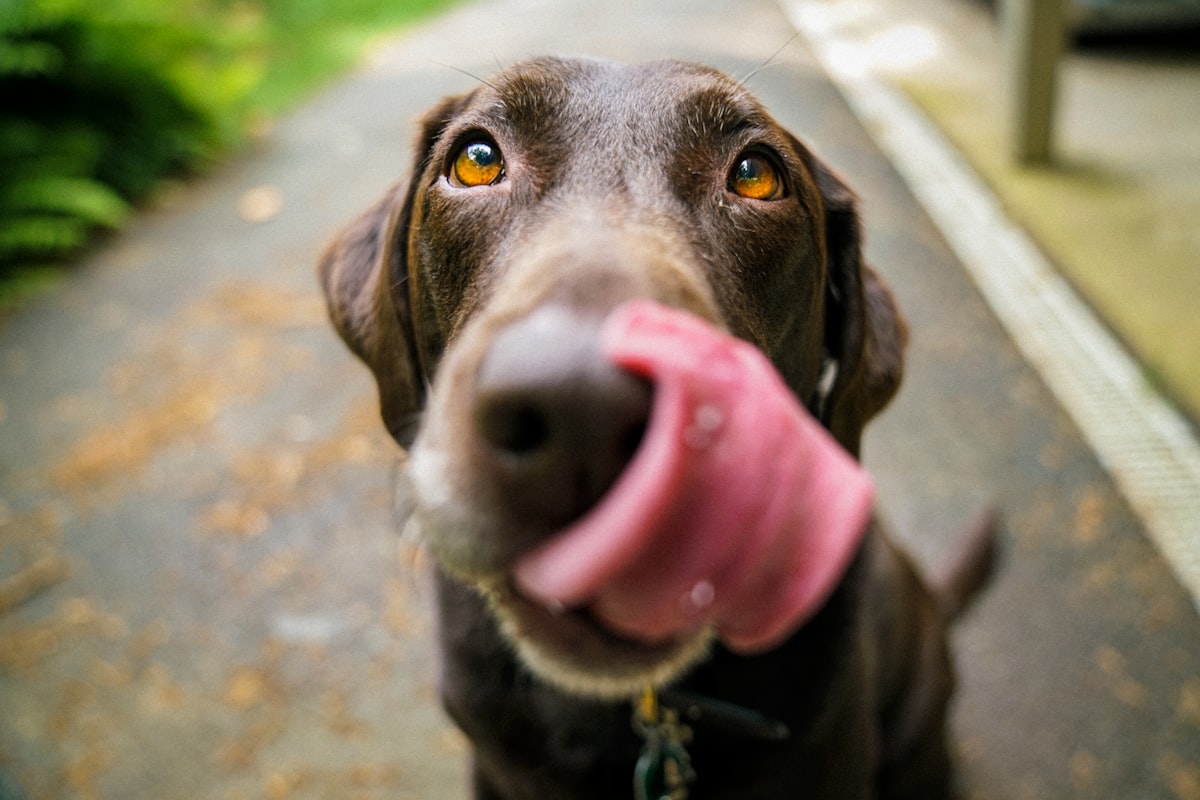
Norwegian trainer and canine ethologist Turid Rugaas coined the term "calming signals" to describe roughly 30 behaviors dogs use to de-escalate tension and communicate peaceful intent. These are easy to miss because they look mundane:
- Yawning (when not tired)
- Lip licking or nose licking (when there's no food)
- Turning the head or whole body away
- Sniffing the ground suddenly
- Slow, deliberate movements
When you see these, your dog is signaling stress and trying to keep the peace — with you, another dog, or the environment. They are a request for more space or a lower-pressure situation.
The ladder of communication
Veterinary behaviourist Kendal Shepherd described a "ladder of communication" — a hierarchy of escalating stress signals. It starts low, with things like yawning and nose licking, and climbs through more obvious signs toward growling, snapping, and finally biting. Dogs almost always start at the bottom of the ladder. Biting is rarely "out of nowhere"; it is usually the top of a ladder whose lower rungs got missed or ignored.
A few more high-value signals to know:
- Whale eye (half-moon eye): the dog turns its head slightly but keeps its gaze fixed, showing the white of the eye in a crescent. It often appears when a dog is guarding a resource, feels trapped, or is being handled in a way it dislikes.
- Freezing: going very still and rigid is often a precursor to a decision — whether to engage, flee, or escalate. A freeze is a serious signal, not a calm one.
- The wagging tail myth: a wagging tail means arousal, not necessarily happiness. That arousal can be excitement, fear, frustration, or aggression. Read the whole dog, not just the tail.
Why you must never punish a growl
This is one of the most important and counterintuitive lessons in all of dog training. A growl is a gift — it is your dog clearly telling you they are uncomfortable and giving you a chance to change the situation.
If you punish the growl, you do not remove the underlying emotion — you remove the warning. Dogs learn fast. If a dog discovers that its early signals (lip licking, head turning) get ignored, but growling proves effective, it learns to skip straight to growling. And if growling gets punished, the dog may learn to skip the warning entirely and go straight to a bite next time it feels threatened. Punishment suppresses communication while leaving the fear intact — which is exactly how you create a dog that bites "without warning."
Body language is your early-warning system for triggers
Reading your dog also transforms how you handle reactivity and fear. Most reactive episodes are not truly sudden — the dog gives off lower-level stress signals first: a lip lick, a head turn, a stiffening, a hard stare at something in the distance. If you can spot those signals, you can add distance or change direction before your dog crosses its emotional threshold and tips into barking and lunging. That matters because learning only happens below threshold; once a dog is over the top, the thinking brain is offline and no training is getting through. In other words, fluent body-language reading is what lets you keep your dog in the zone where progress is actually possible.
Stress stacks up across the day
Body language also reveals how much your dog is carrying. Stress from one event does not vanish instantly — it lingers and accumulates, a process called trigger stacking. A dog that met two other dogs and heard a jackhammer this morning has far less tolerance for the next surprise, even something it would normally shrug off. When you notice your dog throwing calming signals more readily than usual, that is often a sign the bucket is filling and your dog needs a quieter day and some recovery time. Watching for that is one of the kindest, most practical things an owner can do.
Reading the whole picture
Single signals can mislead; context and clusters tell the truth. A stiff, high tail with a slow wag is not an invitation to pet. Many behavior problems — barking, reactivity, defensive snapping — happen because an owner misread the dog and pushed past a "please stop" signal. Learning to spot stress early lets you create distance or change the situation before your dog feels forced to escalate.
Put body-language skills to work
Reading your dog accurately is the foundation of calm walks and confident handling — especially with a reactive dog.
Take our free Reactive Dog quiz for a confidential read on your dog's triggers and a reward-based plan built from the research.
Sources
- AVSAB Position Statements
- What are Reward-Based Training Methods for Dogs (and Cats)? — AVSAB
- Veterinary behaviorists: No role for aversive dog training practices — AVMA
- Reliability and Validity of a Dog Personality and Unwanted Behavior Survey
Take it further
Ready for a complete step-by-step program?
Pup Class has full reward-based training courses for leash reactivity, separation anxiety, recall and more — all built from the research you just read about.
Get your complete reward-based plan on Pup Class →