Dog Fear and Anxiety: The Stress Bucket and the Cortisol Problem
A fearful, anxious dog is not being difficult — they are overwhelmed. Whether it shows up as cowering, barking, lunging, or shutting down, dog fear and anxiety all run through the same underlying machinery: the stress response. Understanding that machinery changes how you help your dog. At Bark Science we ground everything in peer-reviewed behavior research and use reward-based methods only.
Fear is part involuntary, part learned
Fear in dogs is a blend of two things: involuntary responses your dog cannot control — pupil dilation, trembling, raised hackles — and voluntary behaviors like backing away or barking. The involuntary part is the giveaway: a genuinely frightened dog is not "choosing" to misbehave. The body's alarm system has taken over.
The cortisol problem
When a dog encounters a stressor, the brain's stress system kicks in and releases hormones including cortisol. Cortisol is useful in short bursts — it is part of how the body mobilizes for a threat. The problem is what happens when it never gets a chance to clear.
The welfare research makes the cost concrete. In a study of 92 companion dogs, those trained with high proportions of aversive methods showed significantly higher post-training increases in salivary cortisol than reward-trained dogs — and they were more "pessimistic" in a later cognitive test, suggesting the stress shaped their emotional state well beyond training itself. Chronic stress with a persistently overactive stress system is genuinely bad for dogs, and over time it reduces learning capacity and impulse control. A chronically stressed dog literally has a harder time learning anything new.
(An honest caveat the researchers themselves raise: cortisol used in isolation is an imperfect welfare measure, and newer work proposes adding indicators like heart rate variability. The broad picture — that aversive methods raise stress markers — holds across multiple studies.)
The stress bucket and trigger stacking
Here is the most practical model in all of behavior work: the stress bucket. Picture your dog carrying a bucket. Every stressor — a loud truck, a strange dog, a tense moment at the vet — pours some water in. The stress hormones from each event do not drain instantly, so they accumulate. When the bucket overflows, you get the overflow behaviors: barking, lunging, or shutting down.
This is why trigger stacking matters so much. A dog who has already met two dogs and heard a jackhammer this morning has a nearly full bucket. The next trigger — one they might have shrugged off on a calm day — tips them over. The dog has not "regressed"; the bucket was already near the top. Giving your dog recovery time between stressful events, so the bucket can drain, is one of the most underrated tools you have.
Why you can't train a dog who's over threshold
Fear and learning do not coexist. When a dog crosses its emotional threshold, the emotional brain dominates and the thinking brain goes offline — so behavior modification simply does not work in that state. This is the single biggest reason training a scared dog "isn't working": the dog is over threshold, and no learning is possible there. The fix is always to lower the intensity — more distance, less duration, an easier version — until the dog is calm enough to actually think.
The reward-based path
Because fear is an emotional state, the durable solution is to change the emotion, not suppress the behavior. That means working under threshold and using counterconditioning — pairing the scary thing with something wonderful — so your dog's gut reaction gradually shifts from "threat" to "good." Punishment does the opposite: it adds stress to an already overflowing bucket and deepens the fear.
Read the early signals
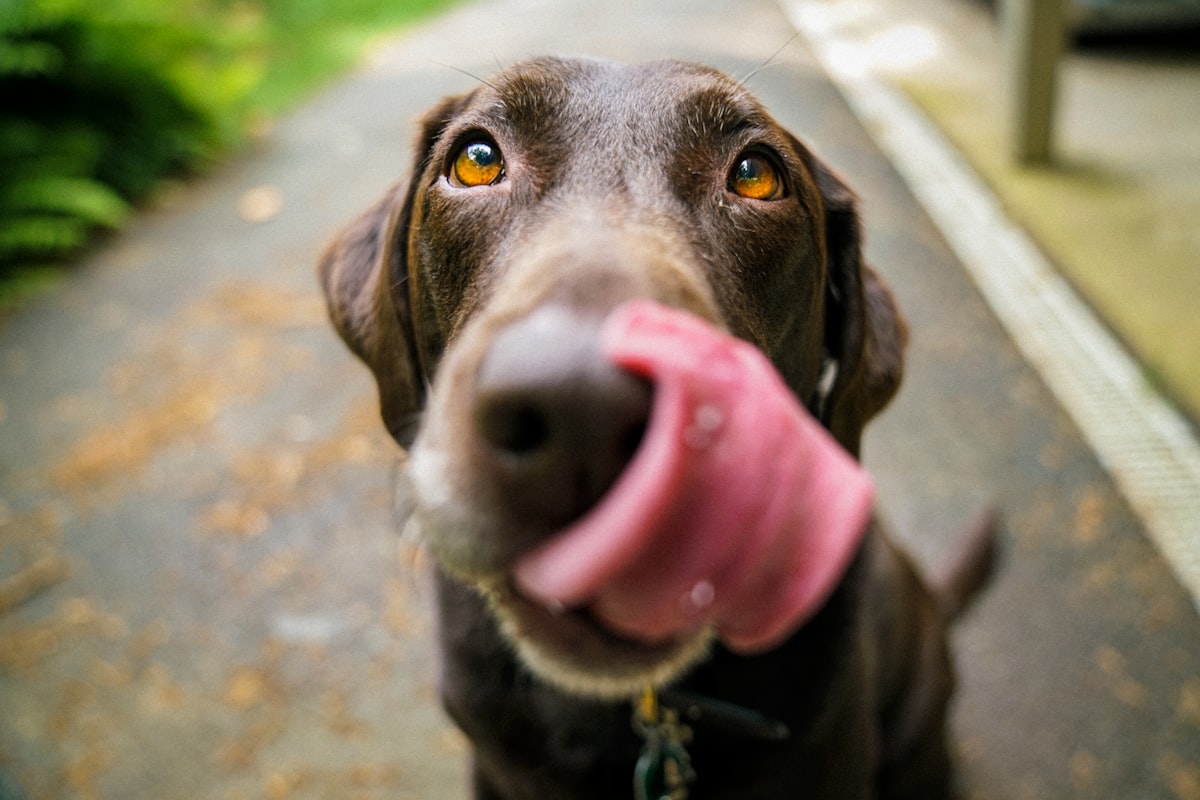
You can often see the bucket filling before it overflows, if you know what to look for. Dogs throw off low-level stress signals — yawning when not tired, lip or nose licking with no food around, turning the head or body away, sudden ground-sniffing, going still. These are your dog asking for more space or a lower-pressure situation. Catching them early lets you adjust before your dog tips over threshold into a full fear reaction. Ignoring them, or pushing your dog past them, is how a manageable situation becomes a meltdown — or, over time, how a dog learns to skip the early warnings altogether.
Don't punish a fearful dog
This deserves to be said plainly: punishing fear-based behavior makes it worse. A growl, a bark, or a snap from a frightened dog is communication, not defiance, and the fear underneath is involuntary. Add a correction and you pour more water into an already overflowing bucket, deepen the fear, and risk teaching your dog to suppress its warning signals while staying just as scared — a genuinely dangerous combination. The research is consistent that aversive methods raise stress markers without improving outcomes, which is why veterinary behavior organizations recommend reward-based approaches for fear and anxiety specifically.
Help your anxious dog the right way
Whether your dog's fear shows up as separation distress, reactivity, or general anxiety, the first step is understanding the trigger and keeping your dog under threshold.
Take our free Separation Anxiety quiz for a confidential read and a reward-based starting plan built from the research.
Sources
- Does training method matter? Evidence for the negative impact of aversive-based methods on companion dog welfare (PLOS One)
- Veterinary behaviorists: No role for aversive dog training practices — AVMA
- AVSAB Position Statements
- Conceptualising the Impact of Arousal and Affective State on Training Outcomes of Operant Conditioning
Take it further
Ready for a complete step-by-step program?
Pup Class has full reward-based training courses for leash reactivity, separation anxiety, recall and more — all built from the research you just read about.
Get your complete reward-based plan on Pup Class →